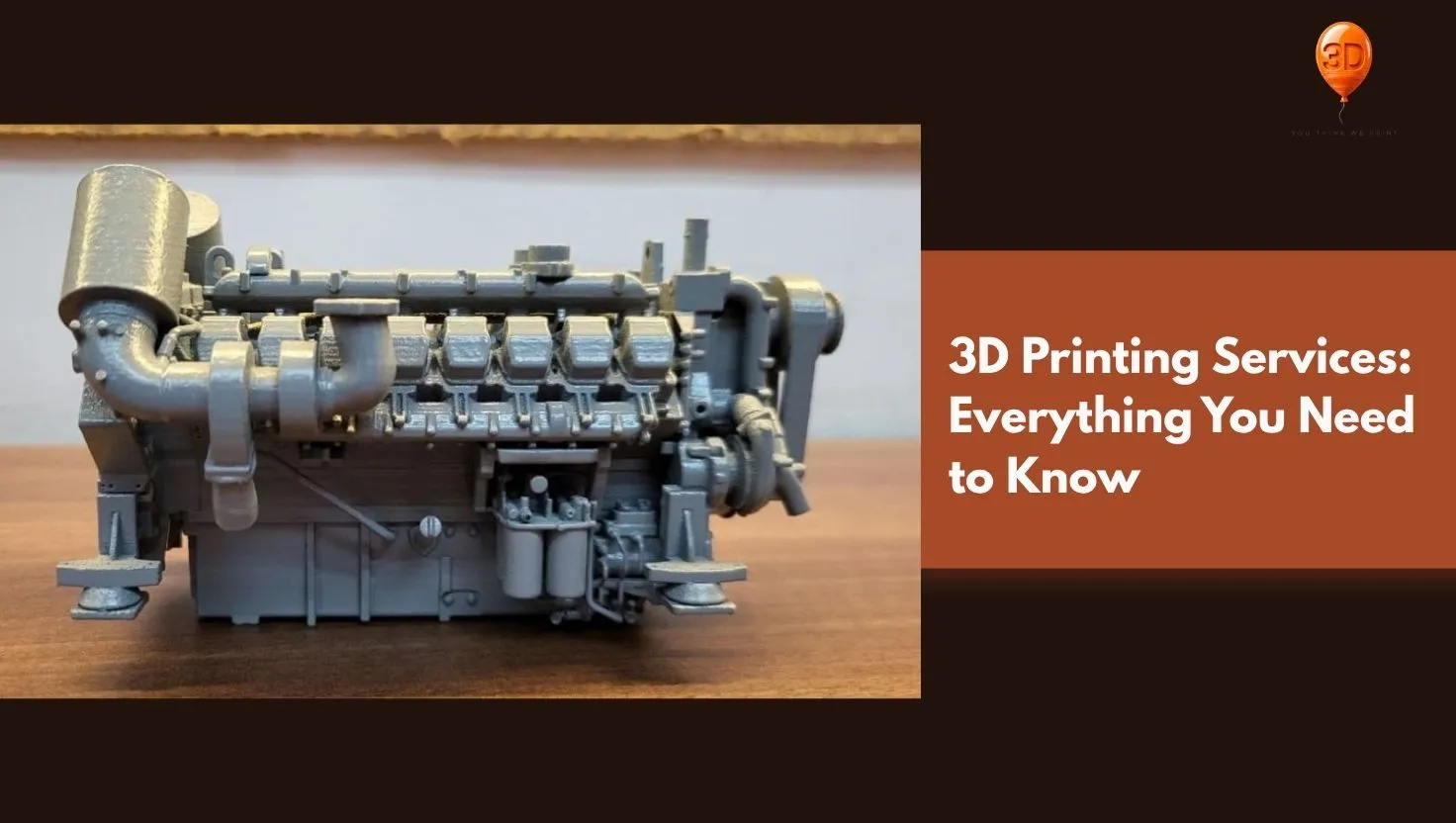
3D printing has transformed how products and models are designed, developed, and produced. Architects, engineers and product designers now use it to turn ideas into physical models, prototypes and finished parts far faster than before. Traditional manufacturing usually starts with a solid block of material and cuts away everything that isn't needed. 3D printing works the opposite way. It reads a digital design and builds the object one thin layer at a time, using only the material the part actually needs.
Presently, 3D printing services are utilized in architecture, engineering, manufacturing, product design, medicine, automotive industry, and many other areas. The appropriate 3D printing service may provide a real version of the idea within a very short period.
What Are 3D Printing Services?
3D printing services refer to the services which provide the process of creating the 3D models into 3D physical products from digital designs and primarily includes additive manufacturing. In accordance with the demands of the project, the 3D printing firm is expected to utilize materials such as plastic, resin, nylon, and so on.
The process of a professional 3D printing service provider usually encompasses several phases of work starting from the design review and including the selection of materials, printing, and further processing of this model. As a result of this process, businesses as well as individuals find it easier to create custom 3D printed products.
How Does 3D Printing Work?
The process begins with a 3D model. This model is usually made using CAD software or other 3D design tools. Once the model is ready slicing software is used to break it down into thin horizontal layers. Each layer becomes a step in the printing process.
Rather than shaping an object from a solid block, a 3D printer creates it gradually by adding material in precise layers based on a digital design. Depending on the type of printing the 3D printer can melt filaments solidify liquid resin bind powder or melt metal.
After printing is finished the product may need to be cleaned supports removed, sanded, cured or painted. The result ultimately depends on the technology the materials chosen the design and the required level of precision.
What Are the Main Types of 3D Printing?
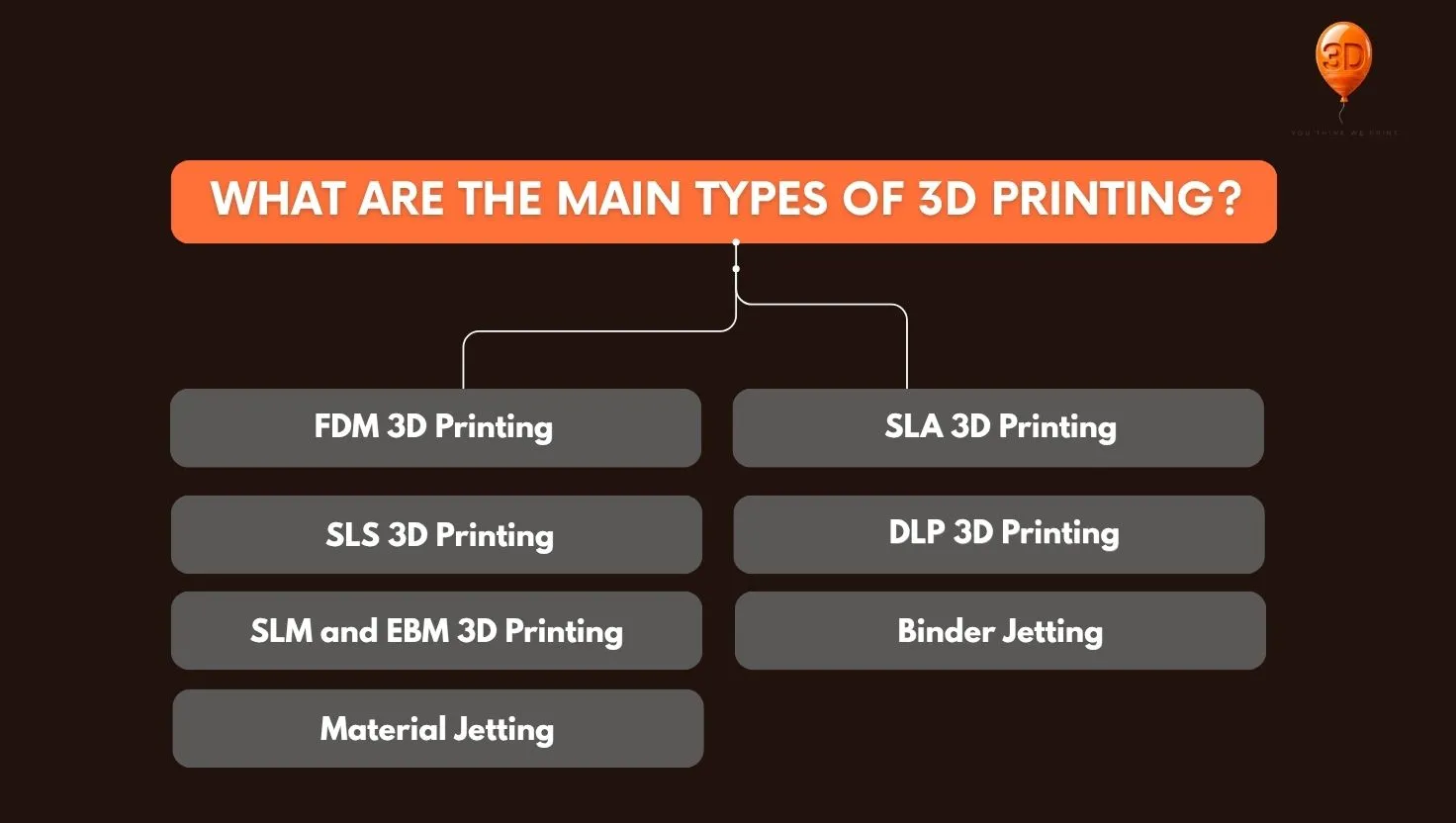
There are different types of 3D printing methods, each of which are used for different tasks. The right method is to be determined by the level of strength, detail, surface finishing, material, amount, dimension, and budget.
FDM 3D Printing
FDM 3D printing or Fused Deposition Modeling creates parts by heating and depositing filament layer by layer. It is widely used because it is practical, affordable and suitable for functional applications.
FDM is commonly used for engineering prototypes, product development, fixtures, tools, functional parts and large models. It is a choice when durability and cost are more important than an extremely smooth surface.
SLA 3D Printing
SLA 3D printing uses light to cure photopolymer resin into solid layers. It is known for producing parts with smooth surfaces and good dimensional accuracy.
SLA is suitable for prototypes, presentation models, miniature components, product development and designs, with fine features.
SLS 3D Printing
Selective Laser Sintering or SLS uses a laser to fuse material, commonly nylon into a solid part. Because the surrounding powder supports the model during printing SLS can produce shapes without traditional support structures.
It is often used for prototypes, mechanical components, custom parts and low-volume production.
DLP 3D Printing
DLP 3D printing is another type of resin-based process. Of curing one point at a time it uses projected light to cure an entire layer all at once.
This method delivers precision and fine detail. It is ideal when you need intricate parts. Common uses include models, jewellery designs, dental models and small components that require exact dimensions.
SLM and EBM 3D Printing
For metal applications SLM 3D printing and EBM 3D printing are effective choices. SLM uses a laser to melt metal powder layer by layer building the part with strength.
EBM uses an electron beam instead which allows for processing in certain cases. These technologies are used to create metal parts for aerospace, medical implants, automotive systems and other engineering fields where performance matters.
Binder Jetting
In Binder Jetting, binding agents are used to create parts from different powders. These powders can either be metal, ceramic or sand which depends on what type of object needs to be made.
Once the right powder layer is ready, there still might be some processes like curing of sintering required to get an object good and strong.
Material Jetting
Material jetting works a bit like an inkjet printer, but in three dimensions. The print head sprays tiny droplets of material onto the build platform, and each layer is cured before the next one goes on top. Many machines can print with several materials or colors in a single job, so one part can carry different textures and shades without any painting afterwards. That makes material jetting a strong choice for realistic prototypes, presentation models and detailed design samples that need to look as good as they work.
It’s especially helpful when the look and finish of the part are important such as, in product development or design reviews.
What Is Resin 3D Printing?
Resin 3D printing works, by using a liquid called photopolymer resin that turns into solid when light hits it. Resin 3D printing is simple yet powerful. SLA and DLP are two types of processes that use this kind of resin.
Resin printing is usually picked when a project requires details, smooth surfaces and a nice final appearance. It can be useful, for making models, product prototypes, jewelry designs, dental applications and detailed display models.
The best resin and the right printing method depend on the desired finish the strength needed the size of the object and how it will be used.
What Are 3D Printing Services Used For?
There are various uses of 3d printing in various sectors. The common applications of 3d printing are:
- 3D printing for prototyping: Produce a model of your product in order to analyze its performance and enhance your design.
- 3D printing for engineering: Create parts, fixtures, and tools that are useful to different engineers.
- 3D printing for architecture: Create models of buildings, sites, and architectural parts.
- Industrial 3D printing: Produce tools, parts and small batches that're hard to make with regular methods.
- Custom 3D printing: Get parts made to the size, design or needs of your project.
- 3D printed models: Turn products, machines, equipment and even ideas, into versions you can hold.
From the first design to prototypes and even some production runs, 3D printing helps at every stage.
What Are the Benefits of Professional 3D Printing Services?
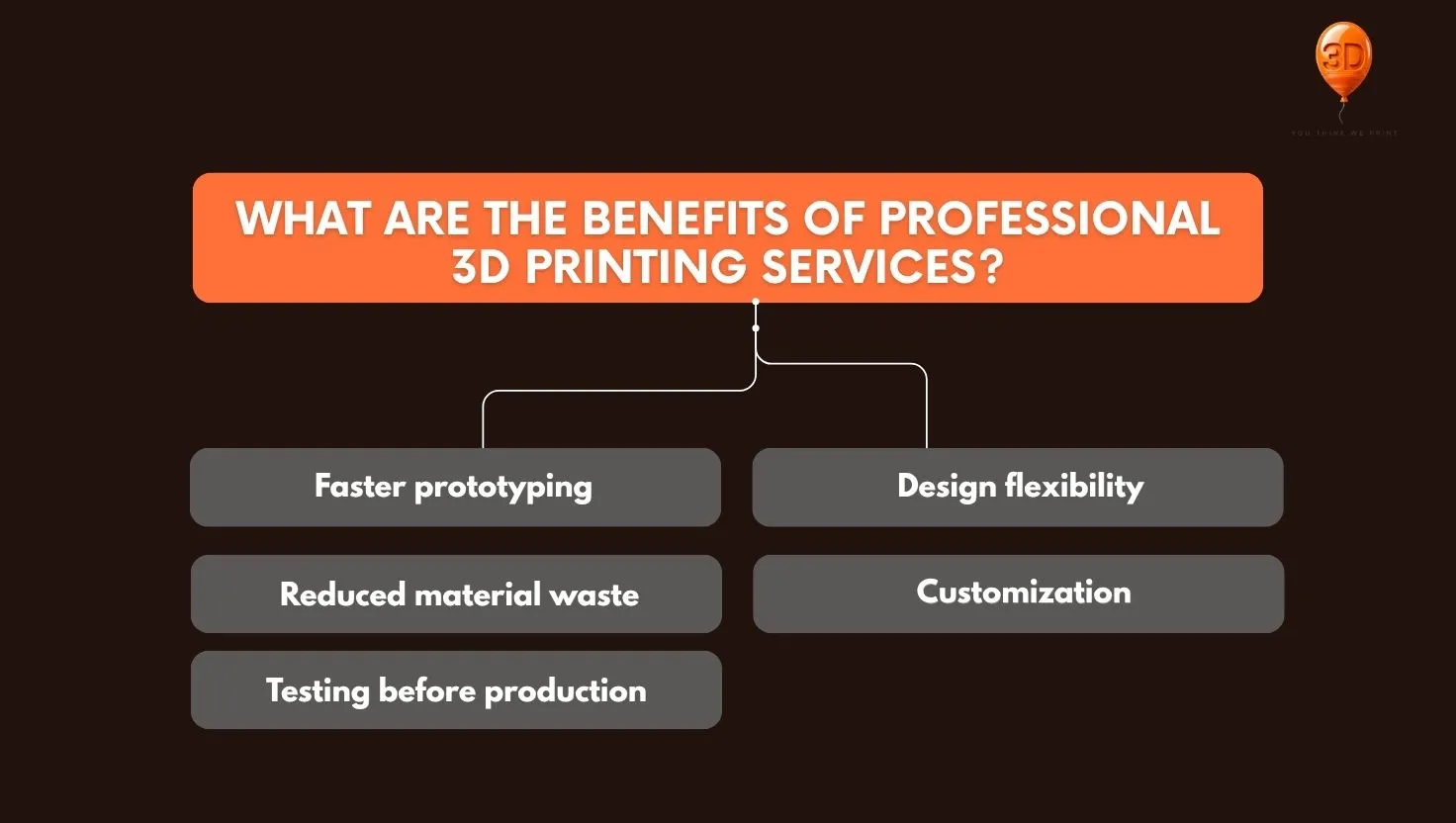
A professional service offers several practical advantages:
Faster prototyping: For designers, production of prototypes becomes quicker than it used to be with regular methods.
Design flexibility: Complicated form and custom designs can often be made easier than regular way of production allows.
Reduced material waste: Additive manufacturing processes allow the building of objects in layers and thus using resources only where it is needed.
Customization: Any professional service can make one-of-a-kind products and small scale batch production.
Testing before production: The availability of a physical object allows teams to check physical parameters, look, assembling, and ability to perform functions before going to production.
How to Choose a 3D Printing Company?
Choosing the right 3D printing company depends on more than the printer itself. Consider the company's experience, available technologies, materials, finishing capabilities, quality control, project size, and turnaround time.
First, clearly define what you need. A detailed presentation model may require a different process from a strong engineering prototype. Ask about material options, expected surface finish, dimensional accuracy, post-processing, and whether the company can work with your existing 3D files.
For local projects, businesses may also search for professional 3D printing services, 3D printing services near me, or 3D printing services in Mumbai to find a provider that can discuss project requirements directly.
Can You Order 3D Printing Online?
Yes. Many professional providers offer 3D printing online, allowing customers to share digital files and project requirements remotely.
However, online ordering should not be based only on price. Check whether the provider understands your design, recommends the correct material and technology, and provides suitable finishing and quality inspection.
For complex engineering, architectural, or custom projects, discussing the design with a professional before printing can help avoid errors and unnecessary reprints.
How Much Do 3D Printing Services Cost?
The cost of 3D printing depends on several factors, including the size of the model, material, printing technology, design complexity, printing time, quantity, and finishing requirements.
A small prototype may have a very different price from a large industrial component or highly detailed architectural model. Therefore, the most accurate way to estimate the cost is to provide the 3D file and project specifications to a professional 3D printing service.
Conclusion
3D printing has become a practical solution for turning digital ideas into physical products, prototypes, models, and components. With technologies ranging from FDM and SLA to SLS and advanced metal printing, businesses can select a process based on their specific requirements.
Whether you need 3D printing for engineering, architecture, prototyping, product development, or custom models, choosing the right technology and professional service is essential. A reliable 3D printing partner can help you select the suitable material, process, finish, and production approach for your project.
Frequently Asked Questions
What are 3D printing services?
3D printing services create physical parts and models from digital 3D designs using technologies such as FDM, SLA, SLS, DLP, and metal 3D printing.
Which 3D printing technology is best?
There is no single technology that is best for every project. FDM can suit functional and cost-conscious prototypes, while SLA or DLP may be better for detailed models. SLS is useful for complex polymer parts, while SLM and EBM are designed for specialized metal applications.
Is 3D printing good for prototyping?
Yes. 3D printing for prototyping allows designers and engineers to create physical versions of a product quickly, test the design, identify issues, and make improvements before final production.
Can 3D printing be used for architecture?
Yes. 3D printing for architecture can be used to create building models, presentation models, site models, design elements, and detailed physical representations of architectural concepts.
Can I order custom 3D printed models?
Yes. Custom 3D printing allows models to be produced according to specific dimensions, designs, materials, and finishing requirements.

3D printing and additive manufacturing from Vasai, Maharashtra — FDM, MSLA resin & SLS.